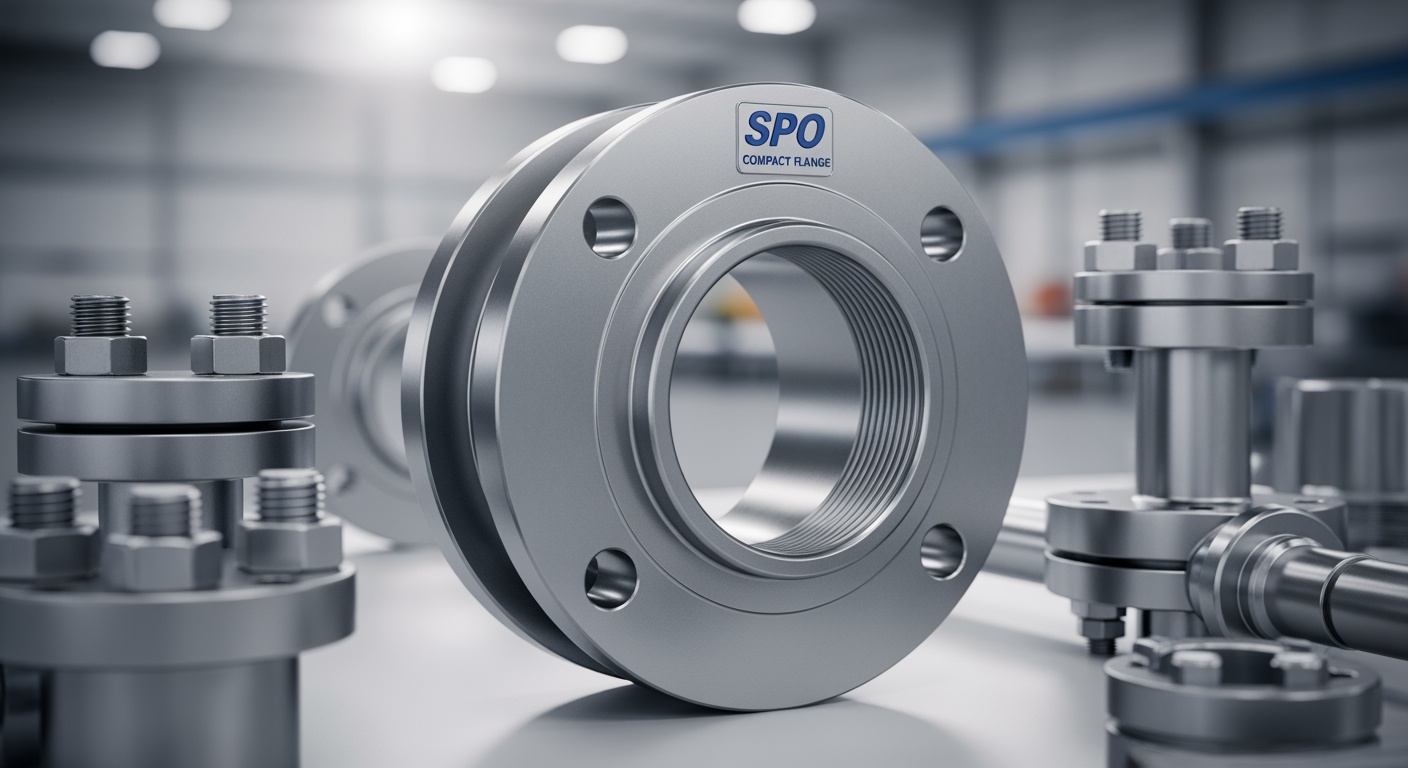
Bolted connections are essential to the reliability of industrial equipment, machinery and infrastructure. From wind turbines and offshore installations to mining equipment and heavy vehicles, correctly tightened bolts help maintain the structural integrity of components exposed to demanding operating conditions.
Although bolting may appear straightforward, industrial applications often involve substantial forces, large fasteners and strict technical requirements. A connection that is insufficiently tightened can become loose under operational loads, while excessive tightening can damage threads, deform components or compromise the fastener itself.
Modern industrial bolting solutions are designed to address these challenges. They include hydraulic torque tools, bolt tensioning equipment and electric or battery-powered tightening systems. Each technology offers different advantages depending on the joint design, accessibility, required preload and working environment.
The development of digital monitoring and connected tools has also changed how industrial bolting operations are managed. Instead of relying exclusively on manual procedures, companies can increasingly document tightening results, guide operators through defined sequences and improve process consistency.
Choosing the right equipment therefore involves more than selecting a tool capable of tightening a large bolt. It requires an understanding of the complete bolting process, including engineering requirements, operator safety, quality control and long-term maintenance.
Industrial bolting technologies for demanding applications
Industrial bolting covers a broad range of applications, from assembling heavy machinery to securing large structural connections. The appropriate technology depends on factors such as bolt diameter, required clamping force, available working space and the consequences of joint failure.
Atlas Copco provides industrial bolting solutions that include continuous rotation tools, hydraulic torque equipment, hydraulic bolt tensioning systems and supporting software. These technologies are used across industries such as wind energy, oil and gas, mining and heavy equipment manufacturing, where controlled tightening is important for operational reliability.
Continuous rotation tools tighten fasteners by applying rotational force through a socket or other suitable attachment. Depending on the design, they may be electrically powered or use rechargeable batteries.
Battery-powered nutrunners are particularly useful in locations where access to fixed power supplies is limited. They can provide greater mobility during field maintenance, especially when operators need to move between numerous fastening points.
Some modern continuous rotation tools also offer electronic control and data collection. This allows tightening operations to be monitored and recorded, helping organisations establish whether specified parameters have been achieved.
Hydraulic torque tools are commonly used when large amounts of torque are required. They use hydraulic pressure to generate controlled rotational force, making them suitable for heavy-duty bolted connections.
These tools are often used with hydraulic pumps and appropriate hoses or connections. Their configuration must match the application, including the required torque range and available space around the fastener.
Hydraulic bolt tensioning takes a different approach. Rather than tightening a nut primarily through rotational force, a tensioner applies an axial stretching force to the bolt. The nut can then be positioned while the bolt is elongated, allowing the joint to develop the intended preload when the hydraulic force is released.
This method can be particularly useful for large critical joints where accurate preload control is important.
Each technology has strengths and limitations. Continuous rotation tools offer flexibility and efficiency in many applications, hydraulic torque equipment provides high torque capability, and hydraulic tensioning can offer advantages where direct control of bolt elongation is required.
Selecting between them should be based on the joint’s engineering specifications and a validated bolting procedure.
Hydraulic torque and bolt tensioning explained
Understanding the difference between torque tightening and bolt tensioning is essential when planning industrial bolting operations. Although both methods aim to create an appropriate clamping force, they achieve this through different mechanical processes.
When a bolt or nut is tightened using torque, rotational force is applied to the fastener. This causes the bolt to stretch and generates a clamping force between the connected components.
However, a substantial proportion of the applied torque is consumed by friction in the threads and beneath the rotating bearing surface. The relationship between torque and bolt preload therefore depends on factors such as lubrication, surface condition, fastener geometry and material properties.
Two apparently identical joints tightened to the same torque may develop different clamping forces if their friction conditions differ. This is one reason why controlled procedures and appropriate lubrication specifications are important.
Hydraulic torque equipment is designed to apply high torque in a controlled manner. It is often used on large flanges, heavy machinery and industrial structures where conventional hand tools cannot provide the required tightening force.
The equipment must be selected according to the specified torque, available clearance and suitable reaction points. Operators also need to understand how reaction forces are transferred during tightening.
Hydraulic bolt tensioning reduces the reliance on rotational friction during the main stretching operation. A hydraulic tensioner grips an exposed portion of the bolt or stud and applies an axial force that elongates it.
While the bolt is stretched, the nut is brought into contact with the joint surface. When hydraulic pressure is released, the bolt attempts to return to its original length, generating the clamping force.
This approach can be useful for large flange connections and other critical applications. However, the final preload still depends on several factors, including load transfer, joint settlement and the specific tensioning procedure.
Bolt tensioning also requires sufficient accessible thread length and suitable geometry for the tensioning equipment. It is therefore not appropriate for every connection.
In some applications, multiple tensioners can be used simultaneously. This may help achieve a more uniform loading pattern across a flange, although the procedure must be engineered for the particular joint.
Neither method should be considered universally more accurate without considering the complete application. Proper engineering, calibrated equipment and validated procedures are essential regardless of the technology selected.
Safety and process control in industrial bolting
Industrial bolting frequently involves substantial mechanical forces and stored energy. This makes operator safety an important consideration, particularly when working with high-pressure hydraulic equipment or large fasteners.
Hydraulic torque tools generate reaction forces that must be managed through appropriate reaction arms and contact points. Incorrect positioning can create dangerous pinch points or cause unexpected movement during operation.
Operators should never place their hands or other body parts within potential reaction zones. The equipment must be used according to the manufacturer’s instructions, and suitable training is necessary before work begins.
Hydraulic systems introduce additional hazards associated with pressurised fluid. Hoses, couplings and fittings must be inspected regularly and used within their rated pressure limits.
Damaged hoses or improperly connected components can create serious risks. Hydraulic systems should therefore be depressurised according to the prescribed procedure before connections are adjusted or disconnected.
The condition of sockets and accessories is equally important. Industrial bolting tools must be used with components designed for the expected forces. Worn or unsuitable accessories can fail under load.
Beyond physical safety, process control is essential for achieving reliable connections. A properly designed bolting procedure should define the required tightening method, target values, sequence and verification requirements.
For flange assemblies, the order in which fasteners are tightened can influence how load is distributed across the joint. Tightening one fastener may change the load in neighbouring fasteners, making the sequence an important part of the procedure.
Certain applications require several tightening passes to achieve a more uniform preload. The appropriate method depends on the joint design, gasket characteristics and applicable engineering standards.
Operator guidance systems can help ensure that these procedures are followed consistently. Depending on the equipment, digital systems may display tightening instructions, monitor completed operations and record relevant process data.
This can reduce the likelihood of missed fasteners, incorrect settings or incomplete tightening sequences.
However, electronic monitoring does not replace engineering judgement or competent supervision. Data must be interpreted correctly, and procedures should be reviewed whenever joint conditions or equipment requirements change.
Digital bolting solutions and traceability
Digitalisation is becoming increasingly relevant to industrial maintenance and assembly. Modern bolting systems can combine mechanical tightening equipment with software that supports planning, execution and analysis.
One of the main advantages is improved traceability. When tightening results are recorded, organisations can maintain information about individual operations, including applied torque, process status and other relevant parameters.
For critical equipment, these records may support maintenance documentation and quality assurance. They can also provide useful information when investigating a connection that has experienced unexpected behaviour.
Battery-powered tightening tools with data collection capabilities can be particularly valuable in field operations. Technicians may need to work across large industrial sites where conventional production-line infrastructure is unavailable.
Connected tools can help bring elements of factory-style process control into these environments. Instead of relying entirely on handwritten records, operators may be able to capture tightening information directly during the work.
Digital bolt tensioning systems can also support operator guidance and process documentation. Depending on the system, software may assist with defining procedures, monitoring progress and recording completed operations.
The benefits are not limited to documentation. Consistent data collection can help organisations identify recurring problems, evaluate maintenance procedures and improve planning.
For example, repeated deviations during tightening may indicate that equipment requires inspection or that the joint preparation procedure needs to be reviewed.
However, recorded torque or pressure values do not automatically establish the exact clamping force in every bolt. The relationship between the measured parameter and the actual joint condition must still be understood.
This distinction is especially important when dealing with safety-critical connections. Digital records provide valuable evidence about the process, but they must be supported by suitable engineering specifications and verification methods.
Introducing connected bolting equipment also requires attention to practical considerations. Software compatibility, data management, operator training and the reliability of communication systems can all influence implementation.
Organisations should therefore establish clear objectives before investing in digital solutions. The aim may be to improve traceability, reduce manual documentation, standardise procedures or strengthen quality assurance.
When these objectives are defined, connected tools can become an effective part of a broader maintenance and operational improvement strategy.
Choosing bolting equipment for industrial environments
Industrial bolting requirements vary considerably between sectors. Equipment used in wind energy maintenance may need to operate at height and in confined spaces, while tools used in mining must withstand demanding working environments.
In the oil and gas industry, bolted flange connections can be particularly important for maintaining the integrity of pressurised systems. Appropriate tightening procedures, gasket selection and joint preparation are essential to reliable operation.
Heavy equipment manufacturers may require solutions that combine high tightening capacity with repeatability and efficient production workflows. Maintenance teams, meanwhile, may prioritise portability and flexibility.
The first step in selecting equipment is to understand the application. Engineers should identify the fastener dimensions, joint configuration, target preload and relevant technical standards.
Access around the joint must also be considered. A large hydraulic torque tool may provide sufficient force but still be unsuitable if there is not enough clearance to position it correctly.
Bolt tensioning equipment requires different access conditions, including sufficient exposed thread and space for the tensioner body. These practical constraints can determine which method is feasible.
Productivity is another consideration. A tool that delivers the required force but takes considerable time to reposition may not be the most efficient option for an application involving hundreds of fasteners.
The total cost of ownership should also be evaluated. Purchase price is only one factor, alongside maintenance, calibration, consumables, operator training and potential downtime.
Reliable service and access to replacement parts can be especially important for equipment used in remote locations or time-sensitive maintenance operations.
Flange spreaders and nut splitters may also be needed as part of the wider bolting process. These tools support disassembly and maintenance when flanges must be separated or damaged fasteners removed.
Using suitable equipment for these tasks can reduce the need for improvised methods and support safer maintenance practices.
Before introducing a new bolting solution, it is sensible to test it under representative working conditions. This helps establish whether the tool provides adequate access, meets the technical requirements and can be operated efficiently.
Industrial bolting technology continues to develop, but the underlying objective remains the same: creating reliable connections through controlled and repeatable processes.
By combining appropriate tightening equipment with validated procedures, competent operators and effective quality monitoring, organisations can improve consistency and reduce avoidable risks.
The most effective bolting solution is therefore not necessarily the most powerful or technologically advanced tool. It is the system that best matches the joint requirements, working environment and long-term operational needs.