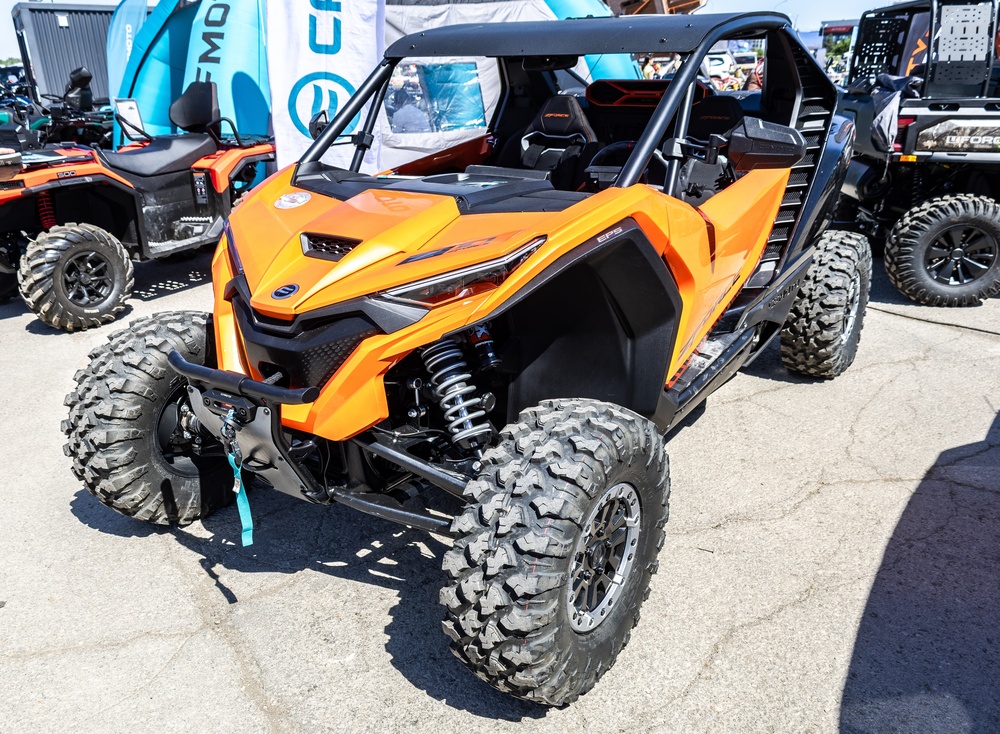
Manufacturing recreational vehicles is a complex business. Customers expect comfort, durability, safety, attractive design and reliable performance, while manufacturers must control production costs and keep assembly processes efficient. Unlike many mass-produced products, recreational vehicles combine numerous materials, systems and components within a relatively confined space. Each manufacturing decision can therefore affect several other parts of the finished vehicle. From fastening and joining to ergonomics and quality control, manufacturers need production methods that can handle this complexity without compromising the experience of the end customer.
Managing complex assembly processes efficiently
A recreational vehicle brings together many different manufacturing disciplines. Structural components must be assembled securely, interior fittings installed accurately and technical systems integrated into the vehicle. At the same time, the production line needs to maintain a consistent pace. A delay at one workstation can quickly affect subsequent stages of assembly.
This makes process efficiency particularly important. Manufacturers need tools and production systems that allow operators to work accurately without introducing unnecessary complexity. When evaluating different approaches to recreational vehicle production, there is an advantage to watching online how industrial solutions can be applied to the specific challenges associated with the sector. Seeing processes and applications in context can make it easier to understand how individual technologies fit into a broader manufacturing environment.
One of the fundamental challenges is achieving repeatable results. Recreational vehicles may contain a large number of fastening points, and each connection needs to perform as intended. Inconsistent assembly can create quality problems that are difficult or expensive to correct later. Manufacturers therefore benefit from production processes where parameters can be controlled and where operators receive clear feedback during assembly.
Efficiency should not simply mean completing an operation as quickly as possible. The objective is to create a predictable production flow in which the correct task is performed correctly the first time. Avoiding rework can have a significant effect on overall productivity, particularly when faults would otherwise be discovered near the end of the production process.
Balancing lightweight construction with durability
Weight is an important consideration in recreational vehicle design. Every component contributes to the total weight of the vehicle, yet reducing weight cannot come at the expense of structural integrity or long-term durability. Manufacturers must therefore find ways to combine lightweight materials and construction methods with reliable assembly.
This balance becomes more challenging because different materials can require different joining techniques. A recreational vehicle can contain metals, composites, plastics, wood-based materials and other components, depending on its design. The production process must accommodate these differences while maintaining the required quality throughout the vehicle.
Fastening is particularly important in this context. Applying too little force may result in a connection that does not perform correctly, while excessive force can potentially damage components or materials. Controlled tightening processes help manufacturers work within defined parameters rather than relying entirely on operator judgement.
The challenge extends beyond the production line. Recreational vehicles are designed to travel, which means their components are exposed to vibration and movement during normal use. Interior fixtures and structural connections therefore need to remain reliable over time. Assembly quality at the factory has a direct influence on how well the vehicle performs once it reaches the road.
Manufacturers also have to consider how changes in vehicle design affect production. Introducing a lighter component or a new material can alter the requirements for fastening, tooling or assembly. Production systems that can be adapted to changing requirements give manufacturers greater flexibility when vehicle designs evolve.
Maintaining quality across numerous operations
Quality control becomes increasingly difficult as the number of assembly operations grows. A recreational vehicle consists of many individual components, and a seemingly minor error can affect the finished product. Manufacturers need ways to detect problems as early as possible rather than allowing them to continue through the production line.
Traditional quality checks at the end of production remain valuable, but they cannot always provide the same level of protection as controlling individual operations while they are performed. If an assembly error is identified immediately, it can often be corrected before additional components are installed. This reduces the risk of costly disassembly and rework.
Traceability can play an important role in this process. Being able to document assembly operations gives manufacturers greater visibility into production and provides useful information when investigating quality issues. Instead of relying solely on the final inspection, manufacturers can build quality assurance into the assembly process itself.
This approach is especially relevant when several vehicle models or configurations are produced on the same line. Different variants may require different components, fastening parameters or assembly sequences. Operators need to know exactly what is required for the vehicle currently at their workstation.
Guided production processes can help reduce the risk of mistakes in these environments. Clear instructions and connected tools can support operators as they move through individual tasks. This becomes increasingly valuable as manufacturers introduce more vehicle variants and customers expect greater opportunities for customization.
Quality is also closely connected to brand reputation. Buyers of recreational vehicles expect their purchase to provide dependable performance over many journeys. Problems such as loose fittings, incorrect assembly or inconsistent finishing can negatively affect that experience. Preventing these issues during production is therefore not simply an operational concern but part of protecting the long-term value of the brand.
Supporting operators while improving productivity
Automation and connected production technologies continue to change manufacturing, but operators remain central to many recreational vehicle assembly processes. The size and complexity of the product mean that numerous tasks still require human skill, judgement and flexibility.
Manufacturers consequently need to consider ergonomics alongside productivity. Tools may be used repeatedly throughout a shift, and their weight, balance and handling characteristics can influence operator fatigue. A process that appears efficient in isolation may become less productive if it places unnecessary physical strain on the person performing it hundreds of times.
Ergonomically designed tools can help create a more sustainable working environment while supporting consistent assembly. Reducing unnecessary movements and making equipment easier to handle can allow operators to focus on completing the task accurately.
Tool accessibility is another consideration. Recreational vehicles contain confined areas and components that may be difficult to reach. Operators need solutions that allow them to work effectively in these spaces without compromising the required assembly parameters. The appropriate tool for an easily accessible exterior fastening point may not be suitable for an operation inside a cabinet or another restricted part of the vehicle.
Training also matters. As production systems become more advanced, operators need to understand how to use them effectively. Technology should support the workforce rather than create additional complexity. Clear interfaces, structured processes and accessible information can make it easier for employees to perform tasks correctly and adapt to changes in production.
Manufacturers that successfully combine skilled operators with suitable technologies can improve productivity without treating automation as an end in itself. The goal is to determine where technology provides measurable value and where human flexibility remains essential.
Preparing recreational vehicle production for changing demands
The recreational vehicle market continues to place significant demands on manufacturers. Customers want vehicles that are comfortable and well equipped while remaining dependable on the road. At the same time, manufacturers face pressure to increase efficiency, maintain quality and respond to evolving product designs.
Production flexibility is therefore becoming increasingly valuable. Assembly systems need to accommodate changes without requiring manufacturers to redesign entire processes whenever a new model, component or configuration is introduced. Flexible tools and connected manufacturing solutions can make it easier to adjust production parameters while retaining control over quality.
Data also has an increasingly important role. Information generated during assembly can help manufacturers understand how production is performing and identify areas where processes can be improved. When production data is available in a structured form, manufacturers can move beyond reacting to individual problems and begin identifying patterns.
A recurring issue at a particular workstation, for example, may indicate that the process itself needs attention rather than simply requiring an operator to work faster. Better visibility allows manufacturers to investigate the underlying cause and make targeted improvements.
The challenge is to introduce technology in a way that supports practical manufacturing objectives. A recreational vehicle factory does not become more efficient simply because more systems are connected or more data is collected. Improvements need to solve specific production problems, whether that means reducing errors, improving traceability, supporting operators or increasing flexibility.
For manufacturers, the most effective approach is therefore one that considers the complete production environment. Fastening, tooling, quality assurance, ergonomics and data should not be treated as isolated areas. They interact throughout the assembly process, and improvements in one area can influence performance elsewhere.
Recreational vehicles are sophisticated products that combine complex engineering with the comfort and functionality customers expect from a mobile living space. Producing them efficiently requires the same balance: precise industrial processes must work alongside flexible, practical assembly. Manufacturers that can maintain this balance are better positioned to manage production complexity while delivering the consistent quality expected from modern recreational vehicles.